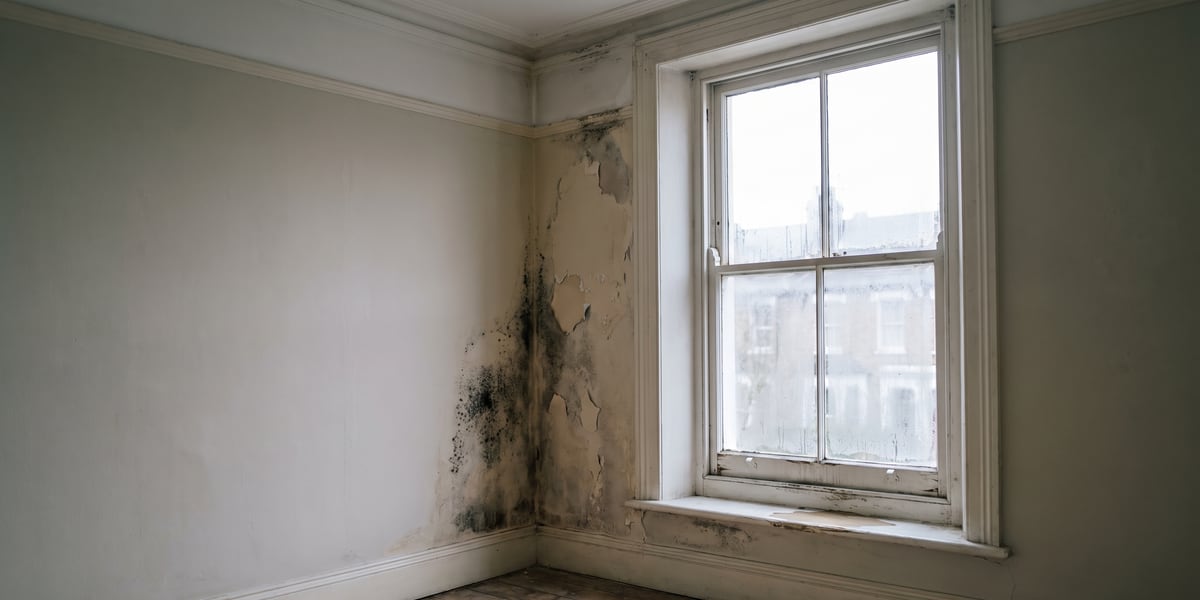
The Landlord and Tenant Act 1985 is the quiet backbone of every residential letting in England. It does not announce itself, it is not something a tenant signs, and it survives untouched by the Renters' Rights Act 2025. What it does is write repair obligations into your tenancy agreement whether you put them there or not, and make them impossible to remove. Section 11 is the clause that decides who pays for the roof. Section 9A, added in 2018, is the one that decides whether the home was fit to live in at all. This guide sets out both properly: the precise boundaries of the repairing covenant, the fitness standard that sits on top of it, the hazard system councils use to enforce it, where damp and mould and Awaab's Law actually stand as of August 2026, and what all of it means for the period stock that makes up most of London's rental market.
The 1985 Act at a glance
- Section 11 covers the structure and exterior, and the installations for water, gas, electricity, sanitation and heating. It does not cover appliances.
- Section 9A, inserted by the Homes (Fitness for Human Habitation) Act 2018, requires the home to be fit to live in at the start of the tenancy and throughout it.
- Both are implied terms. A tenancy clause that tries to shift them onto the tenant is void.
- The duty is normally triggered by notice, and the standard is repair, not improvement.
- Awaab's Law does not yet apply to private landlords. It binds social landlords only, since 27 October 2025.
- The HHSRS was reformed on 23 June 2026: the prescribed hazard list dropped from 29 to 21.
What the Landlord and Tenant Act 1985 actually covers
The Landlord and Tenant Act 1985 is a consolidating statute that implies minimum repair, fitness and information duties into most residential tenancies in England granted for a term of less than seven years. It applies to private and social landlords alike, and to assured, assured shorthold, assured periodic, secure and Rent Act tenancies. It does not apply to licences and lodger agreements, business tenancies, agricultural holdings, crown tenancies, or most fixed terms of seven years or more.
Landlords meet the Act in three places. The first is repairs, at Sections 11 to 17, which is the subject of most of this guide. The second is fitness for human habitation, at Sections 9A to 10, effectively rebuilt by the 2018 Act. The third is service charges and information rights, at Sections 18 to 30, which matters if you own a leasehold flat and pay into a block budget, and which cuts both ways: you are a tenant of the freeholder for those purposes even while you are a landlord to your own tenant.
One point to settle before anything else. The 1985 Act works by implied terms. That means the obligations attach to the tenancy automatically, by force of law, regardless of what your written agreement says. Section 12 goes further and voids any clause that tries to reduce them or that penalises a tenant for enforcing them. A tenancy agreement can add to your obligations. It can never subtract from them. Landlords who inherit a template from a previous letting and assume the document defines their exposure have this exactly backwards: the document is the floor plus whatever you volunteered, and the statute is the floor.
Section 11: what a landlord must repair
Section 11 of the Landlord and Tenant Act 1985 requires a landlord to keep in repair the structure and exterior of the dwelling, and to keep in repair and proper working order the installations for the supply of water, gas and electricity, for sanitation, and for space heating and heating water. That single sentence carries almost every repair argument a landlord will ever have. It is worth taking apart carefully, because the boundaries are narrower in some places and wider in others than most landlords expect.
Structure and exterior
The structure means the elements that give the dwelling its essential appearance, stability and shape. In practice that is walls, ceilings and foundations. The courts have confirmed that staircases and bannisters form part of the structure, and that internal and external plasterwork does too, which is more generous to the tenant than landlords often assume: a ceiling that has blown after a leak is a structural repair, not redecoration. Decorations and loose fittings, mirrors, blinds and the like, are not part of the structure.
The exterior is the outside of the building. External walls, the roof, external doors and window frames, and the drains, guttering and external pipes that serve the property. On a London terrace, that phrase quietly absorbs a great deal of expense: parapet gutters, valley gutters, rainwater hoppers, a shared rear soil stack, and the pointing on a solid brick wall are all exterior for these purposes.
Installations for water, gas, electricity, sanitation and heating
The second limb covers the systems that bring services into the home and take waste out. Water and gas pipes, electrical wiring and sockets, boilers, tanks, radiators and other space heating installations. Sanitation includes the basins, sinks, baths and toilets themselves, not merely the pipework behind them.
Two refinements matter. First, the obligation is not limited to installations inside the tenant's four walls. For tenancies granted since 15 January 1989, the landlord must repair any installation they own or control that directly or indirectly serves the dwelling, which catches communal heating plant in a block the landlord owns. Second, the obligation is to keep installations in repair and proper working order, which has been held to bite even where an installation never worked properly in the first place because of a design fault. "It has always been like that" is not a defence.
What Section 11 does not oblige a landlord to do
This is the half of the section that rarely gets quoted, and it is where a lot of unnecessary spending happens. Section 11 does not require a landlord to:
- Repair appliances. The section covers installations for the supply of gas, water and electricity, not the things that make use of that supply. Ovens, hobs, washing machines, dishwashers, fridges and tumble dryers all fall outside it. You are only on the hook if your tenancy agreement says you are.
- Rebuild or reinstate after fire, flood or storm. That is what buildings insurance is for, and it is a distinct obligation from the repairing covenant.
- Put right damage caused by the tenant failing to use the property in a tenant-like manner. The classic formulation covers the small duties of an occupier: unblocking a sink they blocked, turning off the water before a holiday in winter, replacing a fuse or a light bulb.
- Repair or maintain anything the tenant is entitled to remove, such as their own furniture and appliances.
- Improve the property. Section 11 is a repairing covenant, not an upgrading one, and the distinction is real money. Where a genuine improvement is worth doing anyway, it belongs in a planned programme of decoration and renovation rather than in an emergency repair budget.
The standard: repair, not perfection
Landlords who fear the covenant is limitless should take some comfort here. The standard of repair is measured against the age, character and prospective life of the dwelling and the locality it sits in. A Victorian conversion is not held to the standard of a 2024 new build. The property does not have to be put into a perfect state; it has to be repaired to a standard that makes it fit for occupation by the sort of tenant likely to take it.
Where an item can be repaired rather than replaced, a landlord is entitled to repair it, and where more than one option meets the obligation, the landlord may choose the cheaper one. Replacement can be like for like. You are not obliged to upgrade an installation unless some other law requires it, which is precisely how a boiler replacement, an EICR remediation and a rewire can be genuinely separate decisions with genuinely separate triggers.
The counterweight is timing. Repairs must be carried out within a reasonable time of notice, and there is no statutory definition of that. What courts weigh is the extent of the disrepair, the availability of parts, whether the tenant is still living in the property, and what temporary measures were put in place. A total heating failure in a London January is not a four-week job because a part is on back order; it is a same-week job with temporary heaters in the meantime, and the temporary measures are part of what makes the eventual timescale reasonable.
Fitness for human habitation: Section 9A and the 2018 Act
The Homes (Fitness for Human Habitation) Act 2018 inserted Section 9A into the Landlord and Tenant Act 1985, implying a term that the dwelling is fit for human habitation at the start of the tenancy and remains fit throughout it. Before that, the Act's original fitness provisions were dead letters, tied to rent thresholds last updated in 1957 and therefore irrelevant to every modern letting. The 2018 Act made the standard real and, crucially, made it directly enforceable by the tenant without going anywhere near a council.
The commencement is staggered and still catches people out. Section 9A applies from the outset to any tenancy granted on or after 20 March 2019. For periodic tenancies that began before that date and were never renewed, it applied from 20 March 2020. Where a pre-2019 fixed term rolled into a periodic tenancy after 20 March 2019, it applied from the date that periodic tenancy began. In 2026, with the Renters' Rights Act having converted the sector to assured periodic tenancies from 1 May, the practical answer is that Section 9A applies to essentially every live private tenancy in England.
A property is unfit if it is not reasonably suitable for occupation because of a defect relating to water supply, natural lighting, internal arrangement, drainage and sanitary conditions, facilities for preparing food or disposing of waste water, or a prescribed HHSRS hazard. That last limb is what gives the standard teeth, and it is examined in the next section.
Three differences from Section 11 are worth holding onto, because they are what make Section 9A the more demanding duty:
- It can require improvement, not just repair. If a home is unfit, the landlord must make it fit. If that takes installing something that was never there, so be it. Section 11 would not have reached that far.
- It does not need disrepair at all. A property in perfect structural order can still be unfit. Mould that presents a health risk is the standard example, and it is the reason damp and mould claims so often succeed under 9A where they would have struggled under 11.
- The test is the whole picture. The question is whether the totality of the defects makes the property not reasonably suitable for occupation. A single defect can do it. The High Court has held that a property is unfit where conditions either present a risk to health and safety, or have a sufficiently negative effect on the occupier's comfort and convenience to make the property not reasonably suitable, even without a health risk.
The exclusions mirror Section 11: tenant breach, damage by fire, flood or storm, and things the tenant may remove. For the tenant-breach exclusion to apply, the tenant's failure must be the whole or main cause of the unfitness, which is a materially higher bar than "the tenant contributed". There is also a sensible carve-out where works cannot lawfully be done without a third party's consent and the landlord has made reasonable efforts to obtain it, and where the works would breach another legal obligation such as listed building consent. In Hampstead and other conservation-heavy parts of London, that carve-out is not theoretical, but it protects you only if you can evidence the efforts you made.
HHSRS: the hazard system, and the 2026 reform nobody has updated for
The Housing Health and Safety Rating System, introduced by the Housing Act 2004, is the risk assessment framework councils use to judge housing conditions. It matters to a private landlord for two reasons: it is the trigger for council enforcement, and through Section 10 of the 1985 Act it feeds directly into whether a home is fit for human habitation.
Here is the point most published guidance has not caught up with. The HHSRS assessed 29 prescribed hazards from 2006 until 23 June 2026, when the Housing Health and Safety Rating System (England) (Amendment) Regulations 2026, SI 2026/571, came into force and reduced the prescribed list from 29 to 21 by merging overlapping categories. If you are reading an article that confidently says "29 categories", check its date. A great many landlord guides, including some updated in 2026, still carry the old figure.
The merges are worth knowing, because they change how a deficiency gets scored rather than removing it. Collision and entrapment was combined with the position and operability of amenities. Uncombusted fuel gas, biocides, carbon monoxide and fuel combustion products and volatile organic compounds were folded into one. Fire and explosions were combined. Falls on the level and falls associated with baths were combined. Food safety, domestic hygiene, pests and refuse, and personal hygiene, sanitation and drainage were combined. Nothing was deleted; the nuance moved inside a broader profile.
Two further changes came with the reform. The harm classes formerly numbered I to IV are now named Extreme, Severe, Serious and Moderate. And the operating guidance introduced baseline indicators: a non-exhaustive list of proportionate building measures for each hazard, which are not mandatory requirements but where a failure to meet a relevant indicator should be treated as a deficiency. For a landlord that is the most practically useful part of the whole reform, because it is the closest thing to a published checklist of what "good enough" looks like. The guidance expressly contemplates that an indicator may be unachievable where, for example, listed building consent is not available, which is the same carve-out that runs through Section 9A.
What did not change is the part that decides your exposure. Hazards are still assessed as Category 1 or Category 2. A Category 1 hazard is the serious end, and a council is under a duty to take enforcement action when it finds one. For a Category 2 hazard the council has a power, not a duty. Beneath that, the assessment now sorts hazards into three bands, High, Medium and Low, in place of the old lettered bands A to J, with High broadly corresponding to Category 1 and Medium and Low sitting within Category 2.
The 21 retained hazards still cover the risks that actually turn up in London lettings. Damp and mould growth. Excess cold and excess heat. Electrical hazards. Fire. Falls on stairs and on the level, and falls between levels. Structural collapse. Carbon monoxide and combustion products. Personal and domestic hygiene, sanitation and drainage. Crowding and space. Entry by intruders. Noise. For a landlord, the useful mental model is not the list but the question the assessor asks: is there a deficiency in this dwelling that creates a risk of harm, and how bad could the outcome be for someone likely to live here.
One further point of detail that lawyers rely on and landlords rarely notice. When a council assesses under the HHSRS, it judges the risk to a notional vulnerable occupier in that age group. When a court assesses fitness under Section 9A, it judges the risk of harm to the actual occupier. So a hazard rated modest against a notional occupier can still make a home unfit for the household in front of you, if that household includes an infant or someone with a respiratory condition. A council assessment is strong evidence of unfitness but is not a precondition for it, and a tenant can succeed on a 9A claim without a council ever having set foot in the property.
Damp and mould, and where Awaab's Law actually stands
Damp and mould is now the single most consequential repair issue in the English rented sector, and the area where the gap between what landlords believe and what the law says is widest. It is also the area where the most misinformation circulates, so this section is deliberately precise about what is in force, what is not, and who each rule binds.
What Awaab's Law is
Awaab's Law is the working name for a set of fixed statutory timescales for investigating and remedying hazards, introduced after the death of two year old Awaab Ishak from prolonged exposure to mould in social housing. Legally it sits in Section 10A of the Landlord and Tenant Act 1985, inserted by Section 42 of the Social Housing (Regulation) Act 2023, and the detail is set out in the Hazards in Social Housing (Prescribed Requirements) (England) Regulations 2025, SI 2025/1042, which came into force on 27 October 2025.
Note where it lives. It is a section of the same 1985 Act that carries Sections 11 and 9A, which is exactly why landlords assume it binds them. The section number is the trap.
Who it binds, and the timescales it imposes
Awaab's Law applies to registered providers of social housing: local authority landlords, housing associations and other low cost rented accommodation providers. In its first phase it covers emergency hazards and significant damp and mould hazards reported on or after 27 October 2025. The duties run to a clock:
- Emergency hazards: investigate within 24 hours of becoming aware, and make safe within 24 hours of the hazard being identified.
- Significant damp and mould: investigate within 10 working days from the day after the landlord becomes aware.
- Written summary of the investigation to the tenant within 3 working days of the day after it is completed.
- Make safe within 5 working days of the day after the investigation ends, temporary measures included.
- Preventative works to stop the hazard returning must be started within 5 working days of the investigation, or, where that is genuinely impossible, arranged within that window and begun as soon as reasonably practicable and no later than 12 weeks after the investigation.
- If the property cannot be made safe in time, the landlord must offer suitable alternative accommodation free of charge.
A second phase has been confirmed for 30 November 2026, extending those fixed timescales beyond damp and mould to a wider set of serious hazards including excess cold and heat, falls, structural collapse, fire, electrical hazards and hygiene and sanitation. A third phase, expected in 2027, is set to reach all remaining hazards apart from overcrowding. All of it applies to registered providers of social housing.
The private rented sector position, stated plainly
Awaab's Law does not apply to private landlords. As at August 2026 there is no commencement date for extending it to the private rented sector.
The Renters' Rights Act 2025, which received Royal Assent on 27 October 2025, carries the power to extend Awaab's Law to the private rented sector by regulations. The government's own implementation roadmap places that extension in Phase 3, alongside a Decent Homes Standard for the sector, and the milestone table records both as "TBC, subject to consultation". That is the government's language, not a paraphrase. Phase 1 of the Act commenced on 1 May 2026 and dealt with tenancies and possession. Phase 2, from late 2026, brings the PRS database and the Landlord Ombudsman. Awaab's Law for the private sector sits behind both, and the consultation on how it would work has not yet reported.
So if you read that private landlords now have 24 hours to fix an emergency and 10 working days to investigate mould, that is not the law. It is a description of the social housing regime, applied to the wrong sector. Anyone selling you a compliance product on that basis is selling you something you do not yet need.
Why a private landlord should behave as though it were coming anyway
Two reasons, and neither of them is moral pressure.
The first is that the outcome is already enforceable by other routes. Damp and mould that presents a risk to health makes a home unfit under Section 9A, and a tenant can sue on that directly today, with no council involvement and no fixed timescale to hide behind. Where the damp is traceable to a defect, a failed roof covering, perished pointing, a leaking soil stack, a bridged damp proof course, a dead extractor fan, it is Section 11 disrepair as well. And since 22 June 2026 a council has a fast, direct financial sanction, covered in the enforcement section below. The timescales are what Awaab's Law would add. The liability is already there.
The second is evidential. The single most damaging fact in a damp claim is a landlord who blamed the tenant's lifestyle without investigating. Government guidance for social landlords is explicit that a landlord should not assume damp and mould is caused by the tenant's behaviour, and county courts have shown little patience for the assumption in the private sector either. Condensation genuinely caused by how a household lives is a real thing and is not the landlord's liability. But you cannot assert it. You have to have looked: a dated inspection, moisture readings, a check that the extraction actually works and vents outside, a look at the pointing and the gutters. A landlord who investigated and documented has a defence. A landlord who sent a letter about opening windows has an exhibit for the other side.
Damp and mould duties by sector, August 2026
- Social landlords: Awaab's Law fixed timescales, in force since 27 October 2025, widening to further hazards from 30 November 2026.
- Private landlords: no Awaab's Law timescales. Section 11 disrepair, the Section 9A fitness standard, and HHSRS enforcement all apply in full.
- Coming: Awaab's Law and a Decent Homes Standard for the private rented sector, both in Phase 3 of the Renters' Rights Act roadmap, both listed as subject to consultation with no date set.
Access, notice, and the tenant's duty to report
Repair obligations run on a simple mechanism that both sides routinely get wrong: the landlord generally is not liable until they are on notice, and the tenant generally must let them in.
Notice: when the clock starts
For disrepair inside the dwelling, a landlord's liability normally begins when they are put on notice of the problem. There is no prescribed form. A text message, a WhatsApp, an email, a phone call or a passing comment can all amount to notice. The test is whether the information given was enough that a reasonable person would have made enquiries about whether repairs were needed.
Notice can also be constructive. A landlord who visits a property affected by widespread damp has been held to be on notice even though the tenant did not point out each affected area. Knowledge held by your contractor or your agent can be attributed to you. This is why a repairs inbox that nobody triages is worse than no inbox at all: the notice landed, the clock started, and there is a timestamp to prove it.
Common parts run differently. Where the landlord owns or controls them, the duty arises without the tenant giving notice at all, because the landlord is treated as having control. Where the landlord holds only a leasehold interest in a single flat and does not control the common parts, the Supreme Court has indicated the obligation arises only once the tenant gives notice. For the great many London landlords who own one flat in a converted house, that distinction is the difference between an unpleasant surprise and a manageable one.
A tenant who knows about disrepair and sits on it is not without consequence either. A tenant who fails to report and thereby lets damage worsen may be found to have failed to mitigate their loss, and any damages award can be reduced accordingly. That is a real defence, but it reduces a claim rather than defeating it.
Access: the right, and its limits
Section 11(6) gives the landlord a right to enter the premises at reasonable times of the day, on 24 hours' notice in writing, to view their condition and state of repair. Tenants must allow access for the landlord to inspect and to carry out repairs, provided reasonable notice is given. That rule is unchanged. Do not confuse it with the separate change to local authority powers of entry from 1 May 2026, covered in the enforcement section below, which is about council officers rather than you.
Two cautions. First, the notice right is for viewing condition and carrying out works. It is not a general licence to enter, and it does not override the tenant's right to quiet enjoyment. Turning up unannounced, or letting yourself in because the tenant did not reply, risks a harassment allegation under the Protection from Eviction Act 1977, and the starting point for a civil penalty for unlawful eviction and harassment under the current statutory guidance is £35,000. That is a wildly disproportionate outcome for a boiler service, and it happens.
Second, a refusal of access does not simply cancel your obligation. It suspends it in practice, but only if you can show you sought access properly and were refused. Keep the written requests. Where a tenant persistently refuses and the disrepair is serious, the answer is a documented paper trail and, if it comes to it, a court order, not a forced entry. Sequencing routine inspections alongside your certificate renewals in a single planned visit, as set out in our London landlord's compliance calendar, cuts the number of access requests you need to make in a year, which is the cheapest way to reduce the friction.
What the tenant is actually responsible for
A tenant's duty is to use the property in a tenant-like manner. In practical terms that means keeping the home reasonably clean and ventilated, unblocking what they blocked, replacing light bulbs and smoke alarm batteries, taking reasonable care of the garden if the agreement says so, turning off the water before a winter absence, and reporting problems promptly. They are liable for damage they, their household, their visitors or their pets cause. That is a shorter list than most tenancy agreements imply, and where it shades into ordinary deterioration it is worth reading alongside our guide to fair wear and tear in UK law, because the two questions are decided by different tests and often at the same moment.
What happens when a landlord does not comply
There are three separate routes of consequence, and they are cumulative rather than alternative. A single unremedied hazard can produce a county court judgment, a council penalty and a rent repayment order at the same time, from three different bodies, on three different timetables.
Disrepair and unfitness claims
A tenant can bring a claim in the county court for breach of the implied term, whether under Section 11 or Section 9A, and seek two things: specific performance, an order compelling the landlord to do the works, and damages. Because the two duties overlap, a tenant will usually plead both, since a defect that is disrepair is very often also unfitness.
Damages are typically calculated as a percentage reduction in rent for the period the property was in disrepair or unfit, reflecting the loss of enjoyment of what was paid for, with additional heads for damaged belongings, distress and inconvenience, and any expenses incurred. On a London rent, the arithmetic gets uncomfortable quickly: a sustained defect affecting a substantial part of a flat let at £2,400 pcm, running for a year, produces a figure that dwarfs the cost of having fixed it, before either side's legal costs. Legal aid is available to tenants where there is a serious risk of harm to health or safety and they are financially eligible, and conditional fee agreements cover much of the rest, so the practical barrier to a tenant bringing a claim is lower than landlords tend to assume.
A disrepair claim can also arrive as a counterclaim. Where a landlord brings a possession claim for rent arrears, a disrepair counterclaim can reduce or extinguish the arrears and, with them, the possession claim. Under the post-May 2026 possession regime, where every route to possession runs through a Section 8 ground with evidence, an unaddressed repair history is not a side issue in a possession case. It is a defence.
Council enforcement
Separately, and without any tenant claim, the local housing authority can act. It assesses the property under the HHSRS, and if it identifies a Category 1 hazard it is under a duty to take enforcement action. Its options include a hazard awareness notice, an improvement notice requiring specified works within a specified period, a prohibition order preventing occupation of all or part of the property, and emergency remedial action, where the council does the work itself and recharges the landlord. Failing to comply with an improvement notice is an offence in its own right, and the government's statutory guidance sets a starting point of £25,000 for the civil penalty.
The important recent change is a new and much faster sanction. Since 22 June 2026, under a new Section 6A of the Housing Act 2004 inserted by the Renters' Rights Act 2025 and commenced by the Renters' Rights Act 2025 (Commencement No. 3) Regulations 2026, SI 2026/638, a council can impose a civil penalty of up to £7,000 where it considers it would have been reasonably practicable for the responsible person, normally the landlord, to remove a Category 1 hazard from qualifying residential premises and they did not. That penalty does not require a notice to have been served and breached first. It attaches to the fact of the hazard and the failure to deal with it. Only the civil standard of proof applies, the balance of probabilities, which is a lower bar than the criminal standard required for most housing offences. Government estimates put the share of privately rented homes containing at least one serious health and safety hazard at around one in ten, which tells you how broad the target is.
The procedure follows the familiar pattern. The council must serve a notice of intent within six months of having sufficient evidence, you have 28 days to make representations, a final notice follows with 28 days to pay, and you can appeal the penalty or its amount to the First-tier Tribunal (Property Chamber).
Two commonly confused instruments landed a day apart in June 2026, and a good deal of published commentary has run them together. SI 2026/638 is the commencement order that switched on the £7,000 penalty on 22 June. SI 2026/571 is the HHSRS reform that cut the hazard list from 29 to 21 on 23 June. The reform changed how a hazard is assessed; the commencement order changed what happens to you when one is found. If you see the penalty credited to the HHSRS regulations, that is the two being conflated.
One further change deserves attention because it removes a warning you may be used to having. From 1 May 2026 the Renters' Rights Act amended the local authority powers of entry at Section 239 of the Housing Act 2004, removing the requirement to give the owner 24 hours' notice before entry and allowing an occupier to waive their own right to prior notice. The stated purpose is to stop hazards being concealed ahead of an inspection. In practice it means a council officer can now inspect at a tenant's invitation without telling you first, which is a strong argument for knowing the condition of your own property before somebody else documents it.
Sitting behind all of this, the wider civil penalty framework moved on 1 May 2026, when maximum penalties for a range of housing offences rose from £30,000 to £40,000, and councils came under a positive duty to enforce. Local authorities keep penalty income to fund further enforcement, and there is no expectation in the guidance that they issue warning letters before taking formal action. The full picture of what attracts a penalty and at what level is set out in our guide to Renters' Rights Act fines.
Rent repayment orders, and their real boundary
Rent repayment orders are the remedy landlords most often misunderstand in a repairs context, so it is worth being exact. A rent repayment order is made by the First-tier Tribunal and requires a landlord to repay rent to the tenant, or to the council where housing benefit or universal credit was paid. The Renters' Rights Act extended them to a longer list of offences, extended them to superior landlords, doubled the maximum to two years' rent, and required repeat offenders to pay the maximum.
The boundary is this: a rent repayment order attaches to a listed offence, not to disrepair as such. Simply failing to fix a boiler is not on its own an RRO offence. But failure to comply with an improvement notice under Section 30 of the Housing Act 2004 is, and so are the licensing offences that a great many London landlords are exposed to, letting an unlicensed mandatory or additional HMO, or letting an unlicensed property in a selective licensing area. That is how a repairs problem becomes an RRO: the council serves an improvement notice, the landlord does not comply, and a chain that started with a damp patch ends with a tribunal ordering repayment of up to two years' rent on top of whatever civil penalty the council imposed. On a £2,400 pcm flat, two years is £57,600. It stacks with the penalty; the tribunal is told to disregard any RRO when assessing whether a civil penalty is proportionate.
The London problem: period stock and where the duty actually bites
Everything above is national law. What makes it a London problem is the housing stock. A large share of the capital's rental market is Victorian and Edwardian, converted flat by flat over a century, with shared drainage, solid walls, original window openings and repair boundaries that were drawn by a solicitor in the 1970s and have not been read since. The 1985 Act does not bend for any of that, and neither does the fitness standard.
Period conversions and shared soil stacks
The characteristic London conversion is a three or four storey terrace split into flats, with a single rear soil stack serving every bathroom in the building and rainwater goods shared across the whole roof. Under Section 11 the exterior includes drains, gutters and external pipes, and the installations limb covers sanitation. So a failing cast iron soil stack is squarely within your repairing covenant as far as it serves your flat, even though you cannot unilaterally replace it and even though the actual defect is two floors up in someone else's demise.
The practical trap is timing. The tenant reports a smell or a stain, the landlord establishes the cause is a communal stack, and the matter goes to the managing agent, where it sits. Meanwhile the tenant's clock is running against the landlord, not against the freeholder. Section 9A recognises the difficulty, in that a landlord is not liable where works cannot lawfully be carried out without a third party's consent and they have taken reasonable endeavours to obtain it, but that protection is only as good as your evidence of chasing. Written requests to the managing agent, dated, escalated, and copied to the tenant so they can see what is happening, are the difference between a defence and an admission.
The same shared-infrastructure logic runs through parapet and valley gutters, which are a standard failure point on London terraces and a standard cause of penetrating damp on top floor flats. It is worth knowing before a tenancy starts, not after.
Solid walls, single glazing, and the damp that follows
Most pre-1919 London stock has solid brick walls with no cavity, and a meaningful proportion still has original or early replacement single glazing. That combination produces cold internal surfaces, and cold surfaces produce condensation, and persistent condensation produces mould. The physics is not the tenant's fault, and increasingly the law does not treat it as though it were.
This is where Section 11 and Section 9A part company in a way that matters commercially. A cold, single glazed solid wall flat may have no disrepair at all: nothing is broken, everything is as built. Section 11 has little to say. But if the resulting mould presents a risk to the occupier's health, the property can be unfit under Section 9A, and remedying it may require improvement rather than repair. Adequate mechanical extraction in the kitchen and bathroom that actually vents to outside, background ventilation, and dealing with cold bridging are the practical answers, and they are improvements.
They also happen to be the same works that move an EPC. With the minimum efficiency standard for private rented property moving to EPC C from 1 October 2030, a landlord facing a mould complaint on a solid wall period flat in 2026 is looking at the front end of a job they will have to do anyway. Sequencing insulation, glazing and ventilation as one planned project rather than three reactive ones is the difference between a capital improvement and four years of emergency call-outs. Our guide to the MEES regulations and the EPC C deadline sets out the standard, the exemptions and the cost cap.
The pattern is most acute in the period-heavy pockets of north London. In Hampstead, where the stock is dominated by Victorian villas, Edwardian mansion blocks and Grade II listed Georgian houses, the fitness question collides directly with conservation and listed building consent, and the Section 9A carve-out for works that would breach another legal obligation becomes a live and documented argument rather than a footnote. In Islington, where Georgian terraces around Canonbury sit alongside large Victorian conversions in Highbury and canal-side flats along the Regent's Canal, the recurring pattern is old plumbing, added-to electrical layouts and damp management that the landlord needs to be able to explain before a tenant asks. In both, the honest position is that the building is the risk factor, and the answer is a survey before the tenancy rather than a dispute during it.
Leasehold: where your repairing boundary actually is
If you let a flat, you are simultaneously a landlord under the 1985 Act and a leaseholder under your own lease, and the two boundaries do not line up. Your tenant's Section 11 rights follow the statute. Your ability to deliver on them follows your lease and your freeholder.
Three things follow from that. First, read the demise. Whether the windows, the internal plaster, the ceiling void, the balcony and the section of soil stack within your flat are yours or the freeholder's is decided by the lease, and it varies enormously between buildings of identical appearance. Second, your Section 11 obligation extends to any part of the building in which you have an estate or interest that affects the tenant's enjoyment, which can include an easement such as a right of way over a shared entrance hall you do not own. Third, the money runs the other way through the service charge: Sections 18 to 22 of the same 1985 Act require service charges to be reasonably incurred and works to be of a reasonable standard, give you the right to a written summary of costs and to inspect the receipts, and require consultation on qualifying works above £250 per leaseholder. If your freeholder's neglect of the roof is causing your tenant's damp, those sections are the lever, and they are in the same statute as the duty you are being held to.
Ex-local-authority blocks add a further wrinkle that is common in Islington and Southwark: freeholder compliance paperwork for communal plant frequently does not transfer to the individual flat, so a landlord needs their own records for the demise even where the block is well run. Certificates for the flat itself, the gas safety record and the EICR, are yours to hold regardless of what the block managers say they have.
How AIHPG approaches this
Our view is that repair liability under the 1985 Act is an evidence problem long before it is a building problem. Almost every claim that succeeds against a landlord succeeds because there is no record: no dated condition report at the start, no log of when the tenant reported it, no note of what was inspected, no photograph of the cause. The works themselves are rarely the expensive part.
So for the landlords we manage, the sequence is fixed. Every tenancy opens with a professional inventory and check-in report, photographed and dated, which establishes the condition the repairing covenant is measured against. Reported issues are logged with the date and time they arrived, because that is when the reasonable-time clock starts and because a timestamp is the first thing a court asks for. Damp reports get an inspection, not a leaflet: extraction tested, readings taken, external envelope checked, cause identified in writing before anyone talks about ventilation habits. Where the cause turns out to sit with a freeholder or a neighbouring demise, we chase it in writing, escalate it, and keep the tenant informed, because that correspondence is the Section 9A defence.
The compliance work that sits alongside the repairing covenant, EICR, gas safety, EPC, inventory and cleaning, is delivered by our own teams and included as standard, which is what lets us inspect and remedy in the same visit rather than scheduling three contractors across a fortnight. On London period stock, where the same visit can turn up perished pointing, a dead extractor and a consumer unit that will not pass, that matters more than it sounds. And where a property genuinely needs improvement rather than repair, ventilation, insulation, glazing, we would rather plan it against the 2030 EPC C deadline than fund it twice through emergency call-outs. That is the whole logic of our management service: the operational work handled and evidenced, so that when a question about condition arrives, the answer already exists in writing.
Repair liability decided by records, not arguments
Dated inventories and check-in reports, timestamped repair logs, damp investigated properly rather than blamed on the tenant, and EICR, gas safety, EPC, inventory and cleaning included as standard. So that when a tenant, a council or a court asks what you did and when, the answer is already documented.
Talk to us about management →Frequently asked questions about the Landlord and Tenant Act 1985
What does the Landlord and Tenant Act 1985 require landlords to do?
The Act implies terms into most residential tenancies granted for less than seven years. Section 11 requires the landlord to keep the structure and exterior in repair, and to keep the installations for water, gas, electricity, sanitation, space heating and water heating in repair and proper working order. Section 9A requires the home to be fit for human habitation at the start of the tenancy and throughout it. Neither can be contracted out of.
What repairs is a landlord responsible for under Section 11?
Walls, roof, foundations, external doors and window frames, drains, gutters and external pipes, plus internal and external plasterwork and staircases, all count as structure and exterior. On the installations side it covers pipework, wiring and sockets, boilers, radiators, tanks, and sanitary fittings such as baths, basins, sinks and toilets. Decorations and loose fittings are not part of the structure.
Does Section 11 cover appliances like ovens and washing machines?
No. Section 11 covers the installations that supply gas, water and electricity, not the appliances that use them. A cooker, washing machine, fridge or tumble dryer sits outside Section 11, and a landlord is only obliged to repair it if the tenancy agreement says so. Once you write that promise into the agreement it becomes an express term and is enforceable against you.
Does Awaab's Law apply to private landlords?
Not yet. Awaab's Law took effect on 27 October 2025 for registered providers of social housing only, under regulations made under Section 10A of the Landlord and Tenant Act 1985. The Renters' Rights Act 2025 carries the power to extend it to the private rented sector, but that sits in Phase 3 of the government's roadmap and is listed as subject to consultation, with no commencement date set.
Is damp and mould always the landlord's responsibility?
No, but the burden of showing otherwise sits with the landlord in practice. Damp caused by a defect the landlord must fix, a failed roof, perished pointing, a leaking soil stack, bridged damp proof course or absent extraction, is squarely the landlord's problem. Condensation genuinely caused by the way a household lives is not, but a property with no working extraction and single glazing is rarely a clean case of tenant behaviour.
How many hazards does the HHSRS cover?
Twenty one. The Housing Health and Safety Rating System covered 29 prescribed hazards from 2006 until 23 June 2026, when amendment regulations merged overlapping categories and reduced the list to 21. Damp and mould, excess cold, fire, electrical hazards and falls all survive as named hazards. Plenty of published guidance still says 29, so check the date on anything you read.
What can a council do if a private rented home has a Category 1 hazard?
It must act. The options include an improvement notice, a prohibition order, a hazard awareness notice, emergency remedial action with the cost recharged, and since 22 June 2026 a civil penalty of up to £7,000 under the new Section 6A of the Housing Act 2004 where it was reasonably practicable to remove the hazard and the landlord did not. Failing to comply with an improvement notice is a separate offence.
Important, Legal Guidance
This guide is general information for landlords and tenants, not legal advice. Repair and fitness obligations turn on the individual tenancy, the lease, and the condition of the specific property, and the law in this area is moving: the HHSRS was revised in June 2026 and further Renters' Rights Act measures are still to commence. Before acting on a disrepair claim, an improvement notice or a civil penalty, check the current position on gov.uk and legislation.gov.uk, and take advice. The position reflects guidance current at publication in August 2026.